
Emotions of Nature: Alterity, Knowledge and Rhetoric in Jesuits Missions. New France, 17th century
Isabel Harvey
Université Catholique de Louvain, Belgium
23 October 2025, 10.30-12.00
University of Florence, SAGAS Department, Via San Gallo 10, Aula Parva
Mediterranean Emotions – A Global Research Hotspot
Seminar Series “Emotional Grammars of Globalization”
GMeet Link: meet.google.com/wqc-zsok-mus
Abstract
In the Relation of Jesuits from the missions of New France during the 17th century, there are numerous outbursts of exasperation at the climate of this mission land, such as this one from 1635: “La Nouvelle-France est un vray climat où on apprend parfaictement bien à ne chercher que Dieu”. The Jesuits first arrived in New France in 1611, and encountered a territory covered in dense forests, irrigated by thousands of lakes and rivers, with a climate reaching extremes. In the course of their gradual settlement on these lands, and in their travels alongside the Wendats, they acquired knowledge on the continent and experienced powerful emotions. These emotions were situated in a particular context, constructed in the relationship with the indigenous populations, lived and internalized, but also theorized and instrumentalized in a rhetoric of conversion. What were the environmental emotions experienced by Jesuit missionaries? How did these emotions differ from those of indigenous peoples, and why? What were the links between the acquisition, acceptance and application of environmental knowledge and the emotions felt by missionaries in the face of the nature of New France? The Jesuits were not the only missionaries to take over the territories of New France: women joined them as early as the second half of the 17th century. These included the Ursulines, such as Marie de l’Incarnation in Canada and Marie Tranchepain in Louisiana. They, too, experienced the emotions of environmental novelty, but differently from their Jesuit counterparts. What impact did this gendered difference in environ mental experience have on their adaptation of nature and to nature? This presentation will explore the different ways in which groups interacting in the same spaces felt about the environment: missionaries-missioned and men women. It is part of an ongoing research project, MissNature, which aims, on the one hand, to understand what adjustments to nature were needed for a mission to work, and on the other, the role of the environment encountered in the peripheries of Christianity in the orientation taken by the Roman missionary program. We will consider emotions as an actor in an ecosystemic approach to missions and their natural environment.
Speaker’s Bio
Isabel Harvey is an FNRS postdoctoral fellow for the project MissNature, in environmental history of Catholic missions at the Université Catholique de Louvain in Belgium, and an associate professor in the history department of the Université du Québec à Montréal in Canada. She is co-director of the research project Sorores. Religieuses non cloîtrées en Europe (XII-XVIII), supported by the École française de Rome and Casa de Velazquez, and PI of the project L’Église catholique devant les défis environnementaux: missions, mobilité et climat en Italie du Sud, France et Amérique du Nord durant la période moderne, funded by the Social Sciences and Humanities Research Council of Canada.
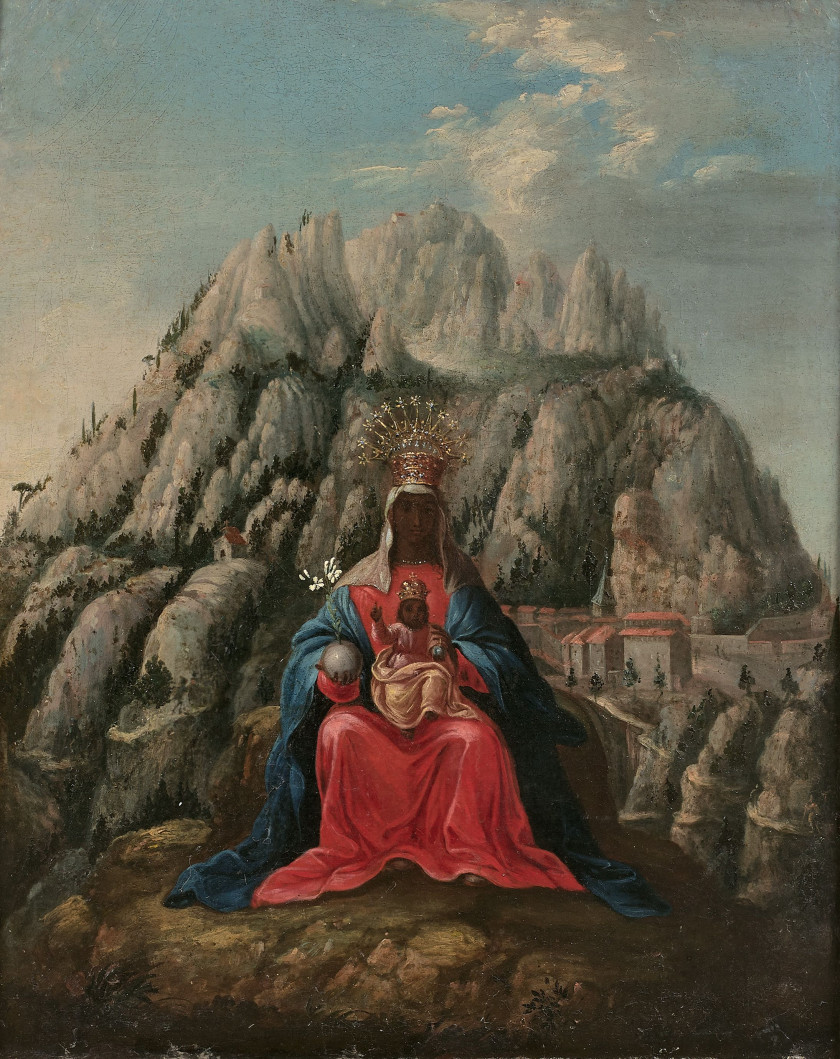
Peruvian, Cuzco School, Virgin of Montserrat, ca. 1645, oil on canvas. Allentown Art Museum.
Ultimo aggiornamento
19.12.2025