
Conditions for Consolation in Late Nineteenth-Century Paris
Marie Van Haaster
European University Institute
28 April 2026, 15.00-17.00
University of Florence, SAGAS Department, Via San Gallo 10, Aula Parva
Mediterranean Emotions – A Global Research Hotspot
Seminar Series “Emotional Grammars of Globalization”
GMeet Link: meet.google.com/wtg-xhfn-emk
Abstract
In the first decades of the French Third Republic, the municipal council of Paris attempted to secularize all public health institutions of the city by replacing nuns with secular nurses, ending chaplaincy, and prohibiting collective prayers and religious festivities. In the debates that surrounded the implementation of these con troversial measures, ‘consolation’ was instrumentalized as an argument against secularization. This paper takes the argument that patients needed religion in order to be able to find consolation as its starting point and explores the social and material conditions for the experience of consolation in this period. It centers around the search for consolation of women with disabilities living in the hospice of the Salpêtrière in Paris in the early 1880s. Cross-reading letters written by these women with contemporary missionary and medical literature, this paper proposes to reflect on the conditions of possibility of experience. How are these conditions constituted? Who can access them? And what is lost when these conditions cannot be met?
Speaker’s Bio
Marie van Haaster is a PhD Candidate at the European University Institute in Florence studying the practices and politics of consolation in the late-nineteenth-century hospice of the Salpêtrière in Paris. She holds a master’s degree in philosophy from the University of Amsterdam and a research master’s degree in History from the Radboud University in Nijmegen. She works on the history of experience and the cultural and social history of medicine.
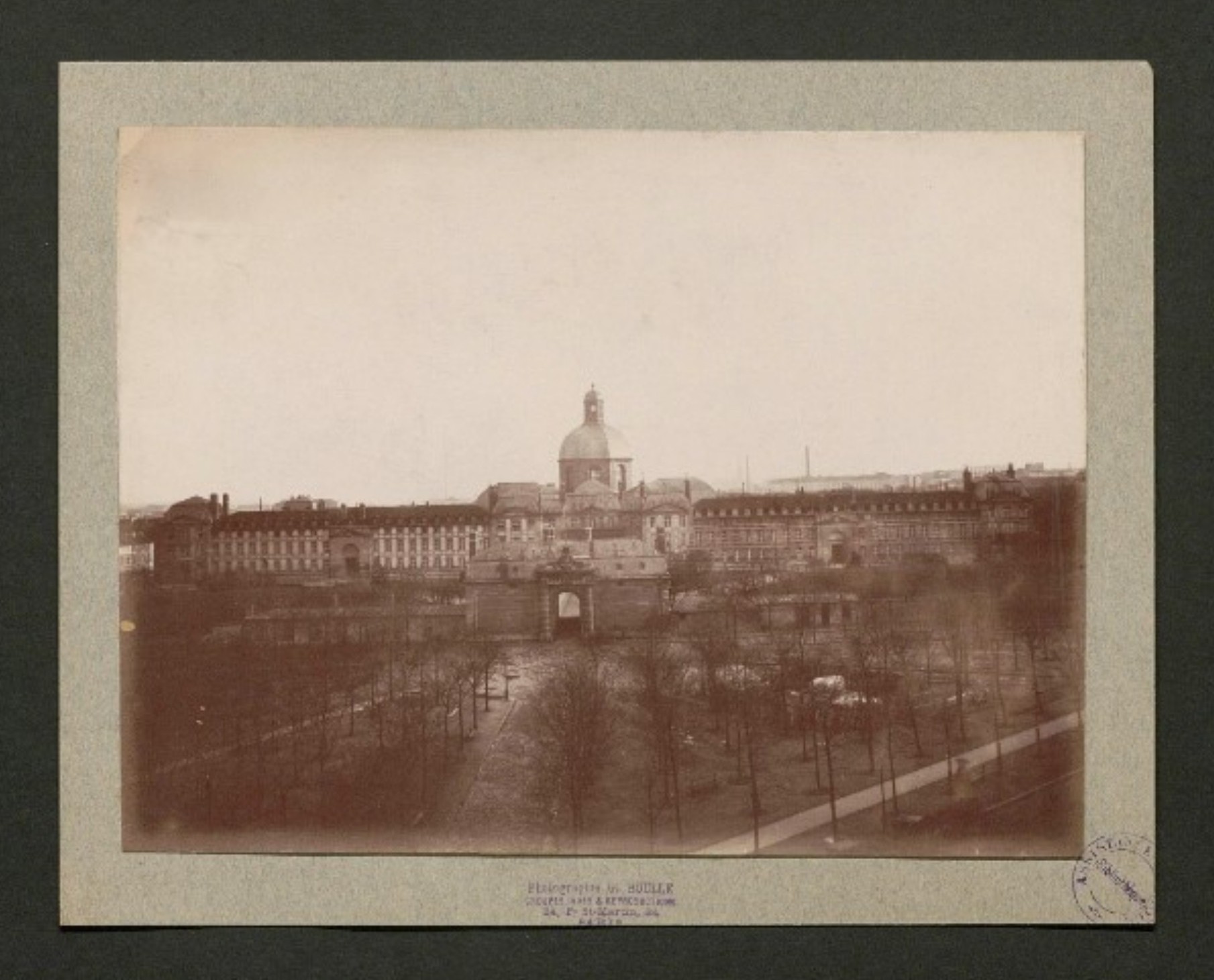
Archives de l'Assistance Publique et des Hôpitaux de Paris. D8774 - Vue générale avec la chapelle Saint-Louis en arrière-plan (1884).
Ultimo aggiornamento
31.03.2026